AI health coach: your method, available 24/7
By Ankur Shrestha, founder of Twinsona – Updated July 2026
An AI health coach is a wellness creator's own AI twin: a version of you that answers your audience in your voice, grounded only in your own content, and linked to the exact source behind each answer. It carries your protocols – how you build an eating pattern someone can actually keep, the wind-down routine you swear by, the way you help people steady their energy and take the edge off stress without burning out – and it stays available around the clock without you in the room. It is not a generic wellness chatbot, and it is not a substitute for a clinician.
The short version: An AI health coach is a grounded twin of one wellness creator that answers from that creator's own videos, posts, and courses, cites its sources, and defers to a professional for anything clinical. This is the creator's guidance, not medical advice. Four things make it trustworthy: it is grounded in your work, it cites what it draws from, you own it and any revenue, and it runs only under limits you set. Copying your tone is the cheap part; holding to the exact routine you actually prescribed, and knowing when to step back, is the product.
If you want the underlying concept first, start with what an AI twin is – a chat, and sometimes voice, version of a specific person, grounded in that person's own content.
Not medical advice: how the twin stays in its lane
Read this before anything else. An AI health coach built on Twinsona gives the creator's guidance, not medical advice. It answers from the creator's own content, cites that content, and defers to a professional for anything clinical – symptoms, diagnoses, medication, injuries, or a condition it has no basis to speak on.
That line is a limit you set and the twin enforces, not a disclaimer bolted on at the end. When a member asks something that crosses into clinical territory, the twin declines and points them to a qualified professional rather than improvising an answer in your name. For a health creator, this is the single most important guardrail: your AI drifting into diagnosis is a liability wearing your face.
What makes an AI health coach trustworthy
Nearly every tool can capture how you sound. The wellness ones that earn trust go further: they can show their receipts for a health claim, and they leave the twin in your hands, not the vendor's. Four marks matter.
- Grounded. It answers from your content – your recipes, your sleep protocols, your podcast on stress and recovery – not from the open internet or its own guesses. Pulling up the exact routine you published before it replies is what keeps a wellness answer honest. Engineers who bolted a retrieval step onto a production system found it "significantly reduces hallucinations in the output" (Béchard and Marquez Ayala, 2024). That sharply lowers the chance of an invented macro number or a made-up supplement dose; it does not rule them out, which is why the citations and the decline behavior below still carry weight.
- Cited. Every answer links back to the source it came from, so a member can check it. Attribution to sources measurably improves how verifiable an answer is (Bohnet et al., 2023). For a wellness routine, "here is the episode where I laid out this protocol" is what separates your method from a convincing imitation of it.
- Owned and monetizable. The twin, the limits on it, your members, and everything they pay stay with you; park your wellness program behind it and the subscription income lands in your account, not a platform's. Named creators already run this play: Tony Robbins' official AI is $39 a month, and Matthew Hussey's "Matthew AI" sits at the same $39 a month.
- Consent-controlled. You decide what the twin can discuss and what it must decline, and it answers only under your consent. This is the mechanism behind the not-medical-advice line above.
In a wellness lane, a twin that has your cadence down but guesses at a fasting window or a macro target does more harm than saying nothing would. Language models are well documented as producing smooth, confident prose that happens to be false (Huang et al., 2023). What a member actually pays for is a twin that stays true to the routine you taught and can point to where you taught it.
Use cases across wellness verticals
An AI health coach turns a back catalog into something a member can talk to at any hour. The pattern holds across lanes.
- Nutrition and eating-habit creators. "How do I hit my protein on your plan while travelling?" The twin surfaces your relevant meal templates and the post where you covered eating on the road, answers in your framing with both linked, and hands off to a registered dietitian or physician the instant a food allergy or a diagnosed condition enters the picture.
- Sleep and circadian creators. A member DMs at 1am asking why they keep waking at 3. The twin gives them your actual wind-down thinking and the light-and-caffeine timing you teach, cited, instead of a canned FAQ – then flags a professional the moment the thread starts to sound like apnea or chronic insomnia rather than a routine tweak.
- Energy, stress, and burnout creators. Someone running flat by mid-afternoon asks how to stop the crash. The twin pulls the exact protocol you published on steadying energy – meal timing, movement breaks, the stress-offload habit you teach – linked to where you said it, and steps back the instant a message reads like clinical burnout or a mental-health issue rather than an ordinary slump.
- Habit-change and sustainable-routine creators. A member who has fallen off their morning routine four days running wants to know whether it is worth restarting. The twin surfaces the post where you argue that a missed day is data, not failure, plus the small-steps rebuild you walk people through, in the order you actually teach it.
If your work is really about physical training – programming, form, progression – an AI fitness coach frames the same twin around that instead, and if it leans toward broad life direction, goals, and mindset, an AI life coach or the more general AI coach is the better fit. Once you have settled on the lane that matches your content, the create your AI clone walkthrough covers building it from your library.
Why "owned" matters for a health creator
Ownership is practical, not philosophical. If you have any kind of public following, unofficial versions of you may already be out there: bots scraped from your videos without your permission, answering as you with no idea whether the routine they are handing out is one you would ever endorse, and nothing stopping them from crossing into advice you would never give. An owned wellness twin is how you retire those and put the real one in their place – built from your content, on your terms, and plainly labeled as an AI.
Ownership here comes down to who holds the controls: your members, the money they pay, the face and voice the twin wears, and the switch that keeps it live all sit with you and move only on your say-so. On Twinsona the twin speaks in your own voice and only inside the limits you grant it. What it does not mean is downloading the weights or running the model on your own hardware – it means the twin, its guardrails, and the income it produces answer to you instead of to a platform's fine print.
FAQ
Is an AI health coach a replacement for a doctor? No. An AI health coach built on Twinsona gives the creator's guidance, not medical advice. It answers from the creator's own content, cites it, and defers to a qualified professional for anything clinical, such as symptoms, diagnoses, medication, or injuries.
How does the twin avoid giving medical advice it should not? You decide up front which topics are in bounds and which the twin must hand off. When a message drifts from a routine wellness question into clinical territory, it stops and refers the person out rather than guessing. Every answer it does give is drawn from your own material and linked, so the source is never a mystery.
Will my AI health coach make things up? A properly built one speaks only from what you have published and shows the link. Anchoring it to your own protocols cuts the odds of a fabricated figure sharply, but nothing gets that risk to zero, so the citations and the limits you set carry the rest of the load.
Can I charge members for access to my AI health coach? Yes. Your twin can sit behind a subscription, and what members pay to talk to it is yours to keep. Creator AIs in the wild already charge their audiences around $39 a month.
Do I own my AI health coach twin? With Twinsona, yes, in the sense that counts: you hold the controls, the limits, and the on-off switch, your members and the revenue are yours, and it all moves only under your consent. It does not mean downloading the model or running it on your own hardware.
Next step
An AI health coach earns its keep only when your members can trust it: answers pulled from your work, sources they can open, limits you set including a clean handoff to a professional, and a twin that belongs to you. Getting the voice right is where it begins – but what counts is a twin that stands behind every health answer it gives in your name.
Ready to see yours? Create your AI twin.
About the author
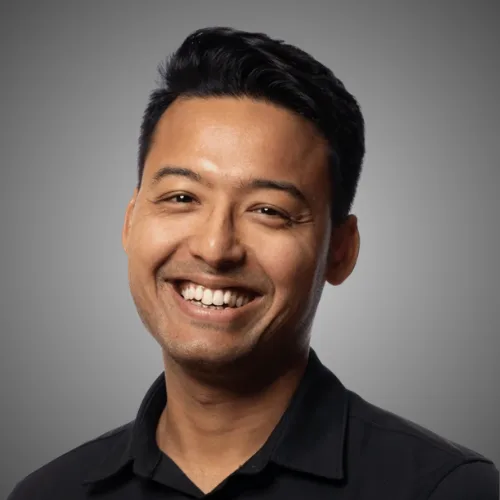
Ankur Shrestha is the founder of Twinsona, where he builds the grounding-and-guardrail layer that keeps a creator's AI twin faithful – answering only from the creator's own content, citing its sources, and never drifting from what they actually said. Before Twinsona, he built agentic AI automating insurance-carrier portals – high-stakes work where being wrong carries real consequences, the same accountability problem he now solves for creators.