AI Mentor: Your Expertise, Available 24/7
By Ankur Shrestha, founder of Twinsona - Updated July 2026
An AI mentor is an always-on version of a mentor's guidance, grounded in that mentor's own frameworks, talks, and writing. It answers the way you would, from what you have actually taught, and cites where each answer comes from. It is one lane of a broader idea: an AI twin, a grounded model of a specific person.
The short version: An AI mentor turns your accumulated advice into something your mentees can ask at 2am. Unlike a generic chatbot, it draws only from your material - your talks, courses, and posts - so the guidance sounds like you and traces back to a source. Grounding this way reduces made-up answers; it does not remove them.
What an AI mentor actually is
Most people picture a chatbot with a friendly avatar. That is not what we mean. A generic chatbot answers from the open internet and a general model's training, so it drifts toward average advice and confident guesses.
An AI mentor is narrower and stricter. It is built on retrieval: before it answers, it pulls the relevant passages from your own content and answers from those. Grounding a model in retrieved source text measurably lowers the rate of fabricated claims (research on retrieval-augmented generation). So your mentee gets your take on delegation, not a blended summary of every business book ever scraped.
Note the naming trap. A "digital twin" is an industrial term for a live model of a machine or system (NIST glossary), not a person. An AI mentor is a model of a human's judgment, which is a different job with different stakes.
How it differs from a generic chatbot
Three things separate a real AI mentor from a wrapper around a general model.
- It is grounded in your material. Answers come from your frameworks and phrasing, not the internet's average. If you have never addressed a topic, a good mentor twin says so instead of inventing an answer.
- It speaks in your voice. With Twinsona, your twin answers in your voice - your cadence and vocabulary - because it learns from how you actually talk and write, not a generic assistant persona.
- It cites its sources. Each answer can point back to the talk, chapter, or post it drew from, so a mentee can check the original. That accountability is the difference between guidance and a guess.
You can build a custom assistant inside ChatGPT and list it in the GPT Store, but that assistant runs on OpenAI's platform, under OpenAI's rules, without your voice or source-level citations. An AI mentor is yours: your audience, your revenue, and your likeness, run under your consent.
What people use an AI mentor for
- Scaling 1:1 advice. You cannot take every call. Your twin handles the repeat questions - the ones you have answered 200 times - so your live time goes to the hard cases.
- After-hours support. Mentees hit blockers at odd hours. An always-on mentor keeps them moving instead of stalling until your next session.
- A front door to your paid work. The twin can answer freely, then point toward your cohort, course, or private community when a question needs real depth.
- Onboarding a program. New members can ask the twin the basics - your core method, your definitions - before they ever reach a live session.
This is close to what an AI coach does; the labels overlap. We use "mentor" for expertise-and-frameworks guidance and "coach" for accountability-and-behavior-change support, but both are the same underlying twin pointed at a different job.
This is already happening at the top
Named experts are shipping this now. Tony Robbins launched real-time AI coaching in his own voice, built with Steno.ai and ElevenLabs text-to-speech (ElevenLabs, July 2025). Robbins and Matthew Hussey both sell access to their AI at $39/month on their own pages (Tony AI; MH AI). Delphi, a platform for this, starts around $79/month with monetization in its top tier (Delphi pricing).
The pattern is set. What varies is how faithful the twin is, whose voice it speaks in, and who owns the result.
FAQ
What is an AI mentor? An AI mentor is an always-on version of a mentor's guidance, grounded in that mentor's own frameworks, talks, and content. It answers from what the mentor has actually taught and cites its sources, rather than guessing from the open internet.
How is an AI mentor different from ChatGPT? ChatGPT answers from a general model and the open web. An AI mentor answers only from one mentor's own material, speaks in that mentor's voice, and cites where each answer came from. That grounding reduces made-up answers, though it does not eliminate them.
Does the AI mentor really sound like me? Yes. With Twinsona, your twin learns from how you actually talk and write, so it answers in your voice and phrasing rather than a generic assistant tone.
Do I own my AI mentor? You control it: your audience, your revenue, and your likeness, run under your consent. Own means control, not download or self-hosting - the twin runs on Twinsona.
Can I charge for access to my AI mentor? Yes. You can charge your audience for access to your twin and keep the revenue. Named experts already sell twin access on their own pages (Tony Robbins and Matthew Hussey at $39/month), so the model is proven.
Ready to build yours?
An AI mentor is one specific shape of a larger thing. If you want the full picture of what an AI twin is and how the grounding works, start there. When you are ready to build, here is how to create your AI clone.
About the author
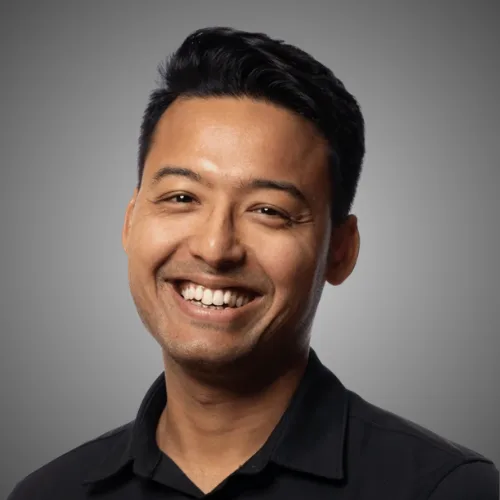
Ankur Shrestha is the founder of Twinsona, where he builds the grounding-and-guardrail layer that keeps a creator's AI twin faithful - answering only from the creator's own content, citing its sources, and never drifting from what they actually said. Before Twinsona, he built agentic AI automating insurance-carrier portals - high-stakes work where being wrong carries real consequences, the same accountability problem he now solves for creators.