AI speaking coach: your method, every rehearsal
By Ankur Shrestha, founder of Twinsona – Updated July 2026
An AI speaking coach is a chat-and-voice assistant a speaker can rehearse with – on opening a keynote, tightening a slow middle, or steadying their hands before they walk on – trained on one real coach's talks and courses. What separates a good one from a stock presentation bot is whose judgment it carries: it runs on a named coach's frameworks, quotes the talk or lesson each note came from, and steps back when a question lands outside what that coach has taught.
The short version: A good AI speaking coach reflects a real coach's method, not a generic model's average. On Twinsona, the twin answers only from that coach's own content – their delivery frameworks, talk structures, and rehearsal breakdowns – cites its sources, and declines when a question falls outside what they have taught. The coach keeps the keys: the audience who books the twin, the revenue it earns, and the voice and likeness it speaks in, used only with their say-so.
Generic speaking bot vs a real coach's twin
Ask a general chatbot how to open a keynote and you get an average of every public-speaking blog ever written. Useful, but anonymous, and quick to invent specifics that were never in any real talk. General-purpose models are known to hallucinate, asserting wrong things with full confidence, a failure mode catalogued across the research (survey of LLM hallucination).
A coach's twin narrows that. Instead of the whole internet, it answers from one coach's talks, workshops, rehearsal notes, and Q&As. Tying a model to retrieved source passages cuts down on invented answers (retrieval-augmented generation study), and pointing to the exact talk behind each note lets a speaker verify it (attribution improves verifiability). That curbs drift without erasing it – so the twin shows its receipts and passes the question back to a human whenever it lands past what the coach has actually said on stage or in a lesson.
The difference matters to a speaker the night before a talk. "Here is a decent opening" is weaker than "here is the exact opening structure your coach teaches, and here is the talk where they used it."
What a speaking coach's AI twin actually does
Coaching public speaking is one narrow use of a general pattern. For the whole category, start with what an AI twin is – a grounded, guardrailed model of one person, built from their own content.
Concrete use cases a speaking twin handles:
- Talk structure. A speaker describes their topic and audience, and the twin returns the coach's actual structure – their opening, their signposting, their close – in the coach's words, with the source it came from.
- Rehearsal feedback. Paste a script or notes and the twin critiques the draft against the coach's own checklist: where the hook is buried, where a story runs long, which transition is missing.
- Nerves and delivery. It gives the coach's real advice on pacing, pausing, and managing nerves – the specific drills they teach – instead of a generic "just breathe" prompt.
- Run it aloud. Because Twinsona includes voice, the twin can coach out loud in the coach's own voice, so a speaker rehearses against the method rather than reading it off a screen.
When a question falls past the coach's material, a well-built twin admits it instead of improvising something that merely sounds stage-ready. That refusal is the whole point – a speaker can rehearse against a note precisely because it traces back to something the coach genuinely teaches, not to the internet's consensus on how to give a talk.
Ownership: the coach's method, not a rented model
Creators are already charging for named AI versions of themselves. Tony Robbins (Tony AI) and Matthew Hussey (MHAI) both run their own AI at $39 a month, and Robbins launched real-time coaching in his own voice (ElevenLabs).
Where Twinsona parts ways with them is the meaning of "own." A custom GPT lives inside ChatGPT and is monetized through OpenAI's store on OpenAI's terms. On Twinsona, the coach holds the twin, the audience, and the revenue, and their likeness and voice are used only with their consent. Voice and consent controls ship with the product, and the coach can put the twin behind a paywall and keep what speakers pay to rehearse with it.
To be exact: "own" here is about control, audience, and revenue – not a model file you download or self-host. The twin lives on Twinsona and runs under the coach's consent.
Speaking is one slice of a bigger skill. If your method covers presence, storytelling, and everyday conversation too, see what an AI communication coach is, and for coaching in any field see what an AI coach is. Once you want to stand one up, walk through how to create your AI clone.
FAQ
Is an AI speaking coach the same as a general public-speaking chatbot?
No. A general chatbot answers from everything it was trained on and can invent specifics. An AI speaking coach on Twinsona answers only from one real coach's own content – their talks and frameworks – cites its sources, and defers to a human when a question falls outside that material.
What can an AI speaking coach actually help with?
Talk structure, rehearsal feedback, and delivery – pacing, pausing, and managing nerves. The twin returns the coach's actual structures, checklists, and drills in the coach's own words, and cites the source each note came from, so a speaker can check it before going on stage.
Can the AI speaking coach rehearse with me out loud?
Yes. Twinsona includes voice, so the twin can coach aloud in the coach's own voice under their consent. A speaker rehearses against the method spoken, not just read, and every note still traces back to the coach's own content.
Does the coach own the AI twin?
The coach controls the twin, keeps their audience and revenue, and their likeness and voice run only under their consent. Ownership means control, not the ability to download or self-host the model.
About the author
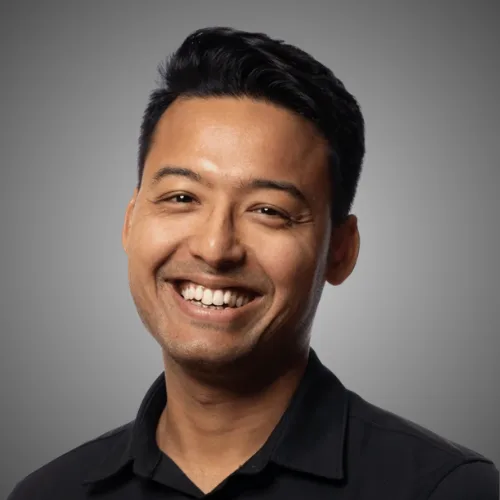
Ankur Shrestha is the founder of Twinsona, where he builds the grounding-and-guardrail layer that keeps a creator's AI twin faithful – answering only from the creator's own content, citing its sources, and never drifting from what they actually said. Before Twinsona, he built agentic AI automating insurance-carrier portals – high-stakes work where being wrong carries real consequences, the same accountability problem he now solves for creators.