How to make an AI clone of yourself (no code)
By Ankur Shrestha, founder of Twinsona – Updated July 2026
You make an AI clone of yourself by feeding a tool your own content – videos, podcasts, posts, courses – so it can answer in your voice from your actual work. No code required. You can do it in four steps: connect your content, let it build a content brain, have it answer with citations, and set the limits it must stay inside. A Custom GPT is the quickest do-it-yourself route, but it's rented and it doesn't cite its sources.
This guide walks the four steps, then is honest about the trade-off between the fast DIY path and an owned, grounded twin.
The short version: To make an AI clone of yourself with no code, point a tool at your own content, let it index that material into a content brain, and have it answer questions from your work with a source link under each reply – inside limits you set. A Custom GPT does a rough version in minutes, but you're renting space in ChatGPT and it won't cite where an answer came from. A grounded twin like Twinsona answers only from your content, links its sources, and stays yours.
What "clone yourself with AI" actually means
Cloning yourself with AI does not mean copying your face into a video. That's an avatar. It means building a chat (and, with some tools, voice) version of you that your audience can talk to, answering from your real body of work rather than making things up.
The useful version is grounded: it retrieves the right passage from your content before it answers, and it can show you which one. For the full picture of what this is and how it differs from an avatar or a Custom GPT, see what an AI twin actually is.
The rest of this page is the how. Four steps, no code.
How to make an AI clone of yourself in 4 steps
1. Connect your content
Point the tool at the material that already sounds like you. A YouTube channel, a podcast feed, a newsletter, a blog, a course, or a folder of transcripts. This is the raw material your clone answers from, so more of your real work means a more faithful clone.
You don't upload a personality. You upload evidence: the things you've actually said. With Twinsona you connect sources like YouTube, a podcast, or a newsletter, and it pulls them in for you.
2. Build a content brain
The tool reads and indexes everything you connected so it can find the right passage for any question later. This is the "content brain" – a searchable index of your work, not a re-training of the underlying model.
You don't touch any of this. There's no code, no fine-tuning to configure. The system chunks your content, embeds it, and stores it so a question can retrieve the two or three passages that actually answer it. For the mechanics of a system that answers only from your material, see a chatbot trained on your content.
3. Answer questions, and cite the source
Now your clone can hold a conversation. Someone asks a question, the tool retrieves the relevant parts of your content, and it replies in your voice from that material rather than free-associating.
The part that separates a trustworthy clone from a party trick is the citation: a good one links the video or post each answer came from, so a reader can check it. That's not decoration. Retrieving your real content before answering is what keeps the clone honest – one production study found that adding retrieval "significantly reduces hallucinations in the output" (Béchard and Marquez Ayala, 2024). It reduces made-up answers; it does not erase them, which is why the next step matters.
4. Set the limits it must stay inside
Decide what your clone can discuss and what it must decline. A grounded clone answers from your content and refuses when a question falls outside it, instead of guessing. That refusal is what keeps a made-up answer from going out under your name.
With Twinsona, your clone speaks in your own voice, stays inside limits you set, and answers only under your consent. You can charge your audience for access to your twin and keep the revenue, so your clone can earn rather than only deflect questions.
That's the whole loop, and there's no code at any step.
The DIY option: a Custom GPT (and its catch)
The fastest no-code route is a Custom GPT. You upload a few files, write an instruction, and you have a rough clone running inside ChatGPT in minutes. Custom GPTs are distributed and monetized through OpenAI's GPT Store, so trying one costs you nothing but time.
Two catches, stated plainly. First, a Custom GPT doesn't cite its sources, so neither you nor your audience can check where an answer came from. Second, it lives inside ChatGPT on OpenAI's terms – you're renting space in someone else's product, not owning the clone, your audience, or any revenue. For the full comparison, see what a Custom GPT is and where it falls short.
A Custom GPT is a fine way to test the idea in an afternoon. It is a weak place to put your name and your reputation long-term.
DIY Custom GPT vs a grounded, owned twin
| Custom GPT (DIY) | Grounded twin (Twinsona) | |
|---|---|---|
| Time to a first version | Minutes | A short setup, then ingest |
| Answers from your content | Loosely, from uploads | Yes, retrieved before answering |
| Cites its sources | No | Yes, a link under each answer |
| Speaks in your voice | Text only | Text, and your own voice |
| You own it | No, it's rented in ChatGPT | Yes – you control it, and your audience and revenue are yours |
| Answers under your consent | Not applicable | Yes, within limits you set |
| Charge for access | Via the GPT Store's terms | Yes, charge your audience and keep the revenue |
"Own" here means control, not a download. You control what the clone can say, whether it's live, and who it answers – and your audience and any revenue are yours rather than a platform's. It runs under your consent. It is not a file you self-host.
For a fuller build path, see create an AI clone of yourself with Twinsona.
FAQ
Can I make an AI clone of myself for free? You can build a rough clone for free with a Custom GPT inside ChatGPT, using a few uploaded files. It won't cite its sources, and you're renting space in ChatGPT rather than owning the clone. A grounded, owned twin is the paid step up when you're putting your name on it.
Do I need to code to clone myself with AI? No. Every step here is no-code: you connect your content, the tool builds the index and handles retrieval, and you set the limits in a settings screen. There's no model training or programming to do yourself.
Will my AI clone make things up? A grounded clone answers only from your content and links the source, and it declines when a question falls outside your material instead of inventing an answer. Retrieving your real content first lowers the risk of made-up answers a great deal, though no system removes it entirely – which is why citations and limits matter.
How is this different from an AI avatar? An AI avatar is a generated video face; it looks like you but doesn't answer from your work. An AI clone in this sense is a chat (and, with some tools, voice) version that answers questions from your actual content and can show its sources. See what an AI twin is.
Can I get paid when my AI clone answers a fan? Named creators already charge for access to their AI – Tony Robbins' AI Twin answers in his own voice as a paid coaching channel, and Matthew Hussey's "Matthew AI" runs at $39/mo. On Twinsona, you can charge your audience for access to your twin and keep the revenue. A Custom GPT can be listed in the GPT Store, but on OpenAI's terms rather than yours.
Next step
Making an AI clone of yourself is four no-code steps, start to finish. The fast DIY route is a Custom GPT, but it's rented and uncited. If you want a clone that cites its sources, stays inside your limits, and stays yours, create your AI clone with Twinsona.
About the author
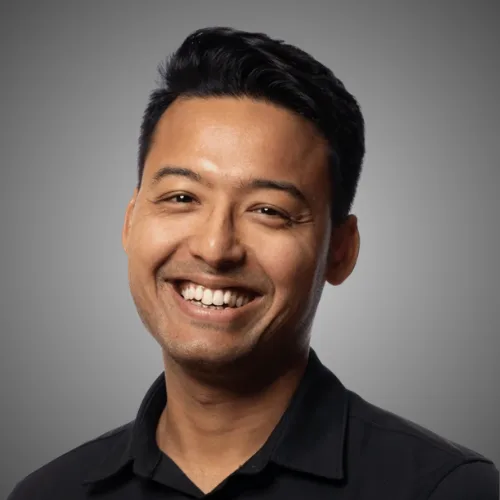
Ankur Shrestha is the founder of Twinsona, where he builds the grounding-and-guardrail layer that keeps a creator's AI twin faithful – answering only from the creator's own content, citing its sources, and never drifting from what they actually said. Before Twinsona, he built agentic AI automating insurance-carrier portals – high-stakes work where being wrong carries real consequences, the same accountability problem he now solves for creators.