What is an AI clone?
By Ankur Shrestha, founder of Twinsona – Updated July 2026
An AI clone is a chat or voice version of a person, built from that person's own content, that answers questions the way they would. The useful kind is grounded: it retrieves passages from the person's real work before it replies, and it can cite the source. It is not a copied face or a fake video. It is a way to talk to someone's knowledge and voice when they can't be there in person.
The short version: An AI clone is a software version of a specific person that answers from their own content in their voice. It differs from a voice clone (which copies only how a voice sounds) and a deepfake (which fabricates a person doing or saying something). A trustworthy AI clone is grounded, cited, and owned: it answers only from the creator's material, links its sources, and runs under their consent. Start with what an AI twin actually is.
AI clone meaning, in plain terms
The phrase "AI clone" usually means a digital stand-in for a real person. You give a tool the person's content – videos, podcasts, posts, courses – and it produces a chat (and, with some tools, voice) version that answers questions from that material rather than inventing replies.
Note the word "clone" here is not the biology sense and not the industrial "digital twin" sense. A digital twin in engineering is a live software model of a machine or system, not a person (see also GE Vernova). An AI clone of a person is about faithfully representing someone's knowledge and voice, which is a different problem with a different bar for trust.
AI clone vs voice clone vs deepfake
These three terms get mixed up. They are not the same thing, and the difference matters for consent and trust.
- AI clone (of a person). A chat or voice version that answers questions from a person's own content. The point is the answers: what the person would say, drawn from what they actually said.
- Voice clone. A model of how a specific voice sounds, so text can be spoken in that voice. A voice clone copies the sound, not the knowledge. It has no content brain behind it on its own.
- Deepfake. Synthetic media that shows a person doing or saying something they did not, usually without consent. A deepfake fabricates; a grounded AI clone answers from real, cited source material and refuses when a question falls outside it.
A good AI clone can use a voice clone as one layer, so it speaks in the person's own voice. Voice at scale is already real: Tony Robbins runs real-time AI coaching in his own voice, built with Steno.ai and ElevenLabs. The difference from a deepfake is consent and grounding, not the technology alone.
What makes an AI clone trustworthy
Any tool can imitate a tone. The hard part is being faithful to what the person actually knows and said. Three properties separate a trustworthy clone from a party trick.
Grounded. A trustworthy clone retrieves the relevant passages from the person's content before it answers, instead of free-associating. One production study found that adding retrieval "significantly reduces hallucinations in the output" (Béchard and Marquez Ayala, 2024). It reduces made-up answers; it does not remove them, which is why the next two properties matter.
Cited. A good clone links the video, post, or episode each answer came from, so a reader can check it. Attribution and citations improve verifiability, and large language models are known to produce confident but false statements without that discipline. The citation is not decoration – it is how you tell whether the clone is being faithful.
Owned. Own here means control: your audience, your revenue, your likeness, run under your consent. A clone carrying your name answers only inside limits you set. Ownership is about control, not a file you download or self-host.
Who uses AI clones, and why
Creators, coaches, and experts use AI clones to answer their audience at scale without answering the same question a thousand times themselves. Named creators already charge for access to their own AI: Tony Robbins and Matthew Hussey both offer creator AI at $39 per month on their own pages.
At Twinsona, a creator's clone speaks in their own voice, cites its sources, answers only under limits the creator sets, and lets the creator charge their audience for access and keep the revenue – priced and billed by the creator. If you want to build one, see how to make an AI clone of yourself.
If your content touches health or fitness, one line matters: an AI clone gives the creator's guidance, not medical advice. The twin answers from the creator's own content, cites it, and defers to a professional for anything clinical.
FAQ
What is an AI clone in simple terms? An AI clone is a software version of a specific person that answers questions from that person's own content, in their voice. The trustworthy kind retrieves passages from their real work before replying and can link the source, rather than making things up. It is not a copied face or a fake video.
What is the difference between an AI clone and a voice clone? A voice clone copies only how a voice sounds, so text can be spoken in that voice. An AI clone answers questions from a person's content, and it can use a voice clone as one layer so it speaks in their voice. The clone carries the knowledge; the voice clone carries the sound.
Is an AI clone the same as a deepfake? No. A deepfake fabricates a person doing or saying something they did not, usually without consent. A grounded AI clone answers from the person's real, cited content, runs under their consent, and refuses when a question falls outside their material. The difference is consent and grounding.
Does an AI clone ever make things up? Grounding a clone in the person's own content and citing sources sharply reduces made-up answers, but no system removes the risk entirely. That is why citations and limits are core to a trustworthy clone, not optional extras.
Do you own your AI clone? Own here means control: your audience, your revenue, your likeness, run under your consent. It does not mean a file you download or self-host. On Twinsona, you can charge your audience for access to your twin and keep the revenue, so the clone earns on your terms.
About the author
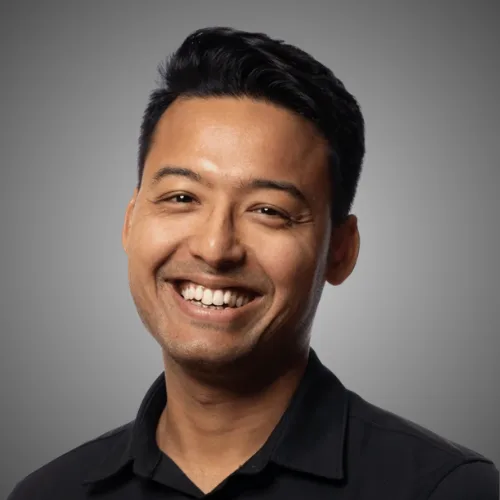
Ankur Shrestha is the founder of Twinsona, where he builds the grounding-and-guardrail layer that keeps a creator's AI twin faithful – answering only from the creator's own content, citing its sources, and never drifting from what they actually said. Before Twinsona, he built agentic AI automating insurance-carrier portals – high-stakes work where being wrong carries real consequences, the same accountability problem he now solves for creators.